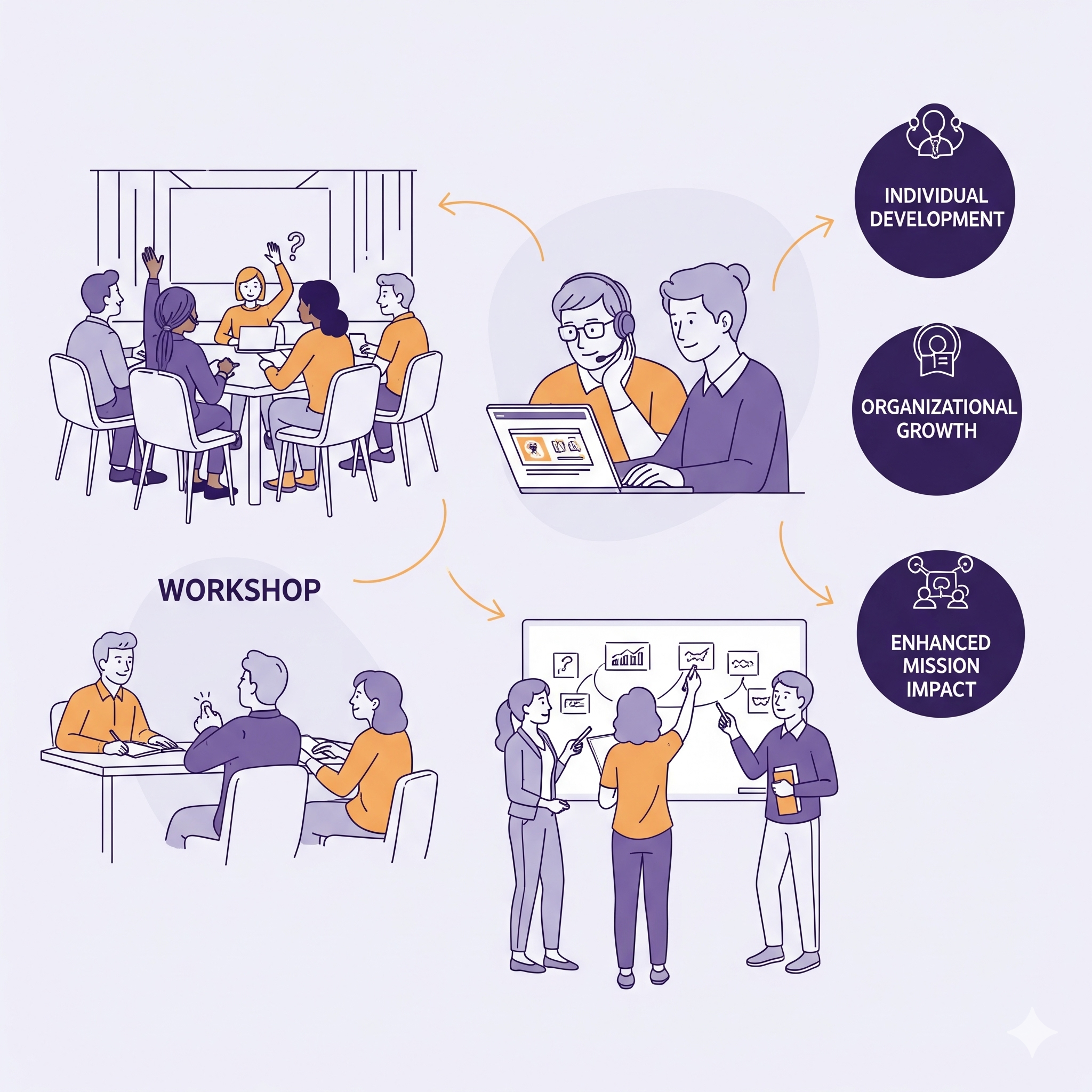
I earned a Master's degree in nonprofit management while working full-time in the sector. The decision to pursue formal education wasn't just about personal advancement; it represented a commitment to bringing greater expertise and strategic thinking to the mission-driven work I cared deeply about.
What struck me most powerfully was the transformation I witnessed across my entire cohort. My classmates were also already working in nonprofits and wanted to grow and develop professionally within the sector rather than leaving for other industries. The program taught us both theory and it helped all of us develop a much wider set of skills, build extensive professional networks, and generate innovative ideas that we could immediately apply in our respective organizations.
The career advancement that followed was remarkable. Many of my classmates went on to receive promotions to director-level positions within their existing organizations. Others were inspired to start their own nonprofits with their newfound confidence, expanded knowledge base, and professional networks. Several leveraged their enhanced skills to transition into consulting roles where they could impact multiple organizations.
The transformation in professional capacity and organizational impact was visible across the entire cohort. We became better individual contributors and in the process we became strategic thinkers who could drive systemic change within our organizations and the broader nonprofit sector.
What I saw in my cohort plays out at the organizational level too. In a sector where talented professionals often feel undervalued and underdeveloped, investing in growth creates real competitive advantages. The retention benefits alone are significant. When people feel valued and see clear pathways for career advancement, they stay. And when you consider the cost of recruiting, hiring, and training replacement staff, development programs often pay for themselves through reduced turnover alone.
But retention is only part of the picture. When team members develop new capabilities, those skills benefit the entire organization. People who grow into leadership internally already understand your mission, your culture, and your donors. That institutional knowledge is irreplaceable.
This is also how you keep good people in the nonprofit sector. Many of my classmates could have left for higher-paying corporate roles. They stayed because the investment in their education signaled that the sector valued them and that there was room to grow without leaving mission-driven work behind.
Going back to school while working full-time was one of the hardest things I've done, and one of the most worthwhile. It gave me frameworks I still use today, a network of peers I still call on, and a broader perspective on what nonprofit leadership can look like. But the biggest lesson wasn't in any textbook. It was watching an entire cohort of dedicated professionals become more confident, more capable, and more committed to the sector -- simply because someone invested in their growth. That's the kind of return that compounds over years.