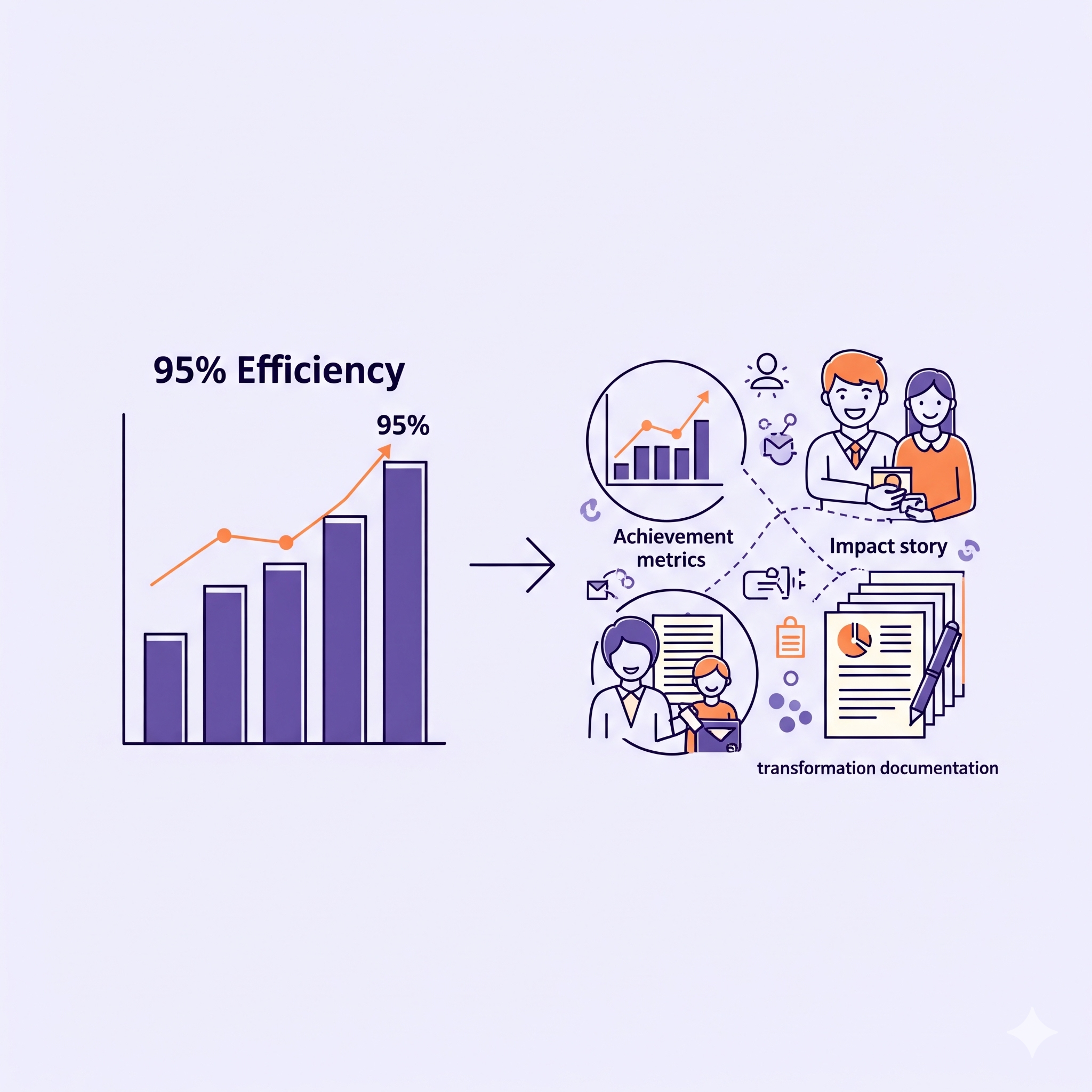
Beyond the 95% Efficiency Myth: How to Communicate Real Impact That Attracts Major Donors

Move beyond simplistic overhead ratios to tell the complete story of your organizational value. Discover how to communicate transformation and real-world impact in ways that increase donor confidence and investment.

Nonprofit Impact Communication

Your nonprofit's high efficiency ratio looks impressive on paper. But when that statistic becomes your primary talking point, you're missing enormous opportunities to showcase the transformational value your organization actually creates. Donors today want more than financial efficiency metrics. They want to understand what programs accomplish with their investment and how their support creates lasting change in the communities you serve.

The organizations that attract major donors and build sustainable funding relationships are those that move beyond overhead percentages to communicate comprehensive impact stories that demonstrate both financial stewardship and mission effectiveness.

The Efficiency Trap That Almost Limited Our Growth

I worked with a nonprofit that had prided itself since its inception on a singular metric: 95% of donations went directly to projects. This statistic was central to all their marketing materials and donor communications. The leadership team genuinely believed this number proved their worthiness as an investment opportunity for potential supporters.

While maintaining low overhead costs was admirable, this narrow focus still missed a significant opportunity to communicate what the projects were actually accomplishing with that money and the broader value being created through organizational expertise, relationships, community-building, resource leverage, and strategic thinking.

I worked with them to develop and share much more comprehensive information about success stories, specific achievements, and transformations that were made possible through donor investments. We created systematic approaches to capture both quantitative outcomes and qualitative stories that showed the full scope of organizational impact.

This shift helped the organization move from a single talking point to a comprehensive collection of demonstrated value being generated across all programs. More importantly, it allowed the organization to make a compelling case for increasing its administrative budget so it could grow capacity and become a more effective organization for the projects it supported, rather than being artificially constrained by overhead limitations that actually reduced their impact potential.

Why Efficiency Metrics Miss the Point

The obsession with overhead ratios reflects a fundamental misunderstanding of how effective nonprofits create value.

"Donors don't just want to know how much money goes to programs. They want to know what programs actually accomplish with that money," explains Dan Pallotta, nonprofit reform advocate and author of "Uncharitable."

This efficiency-only mindset creates what researchers call the "overhead myth" that has damaged nonprofit effectiveness for decades.

"It's time to focus on impact per dollar, not administrative percentage," notes the Charity Navigator research team.

When organizations artificially constrain their operational capacity to maintain arbitrary efficiency ratios, they often sacrifice exactly the investments that would increase their mission impact.
The statistics reveal the missed opportunity. A July Candid study found that funders donate 62% more to transparent organizations. This is likely because they're demonstrating value creation rather than just financial discipline. Donors who understand the full scope of organizational impact become more engaged supporters who increase their giving over time.

Impact Communication Framework

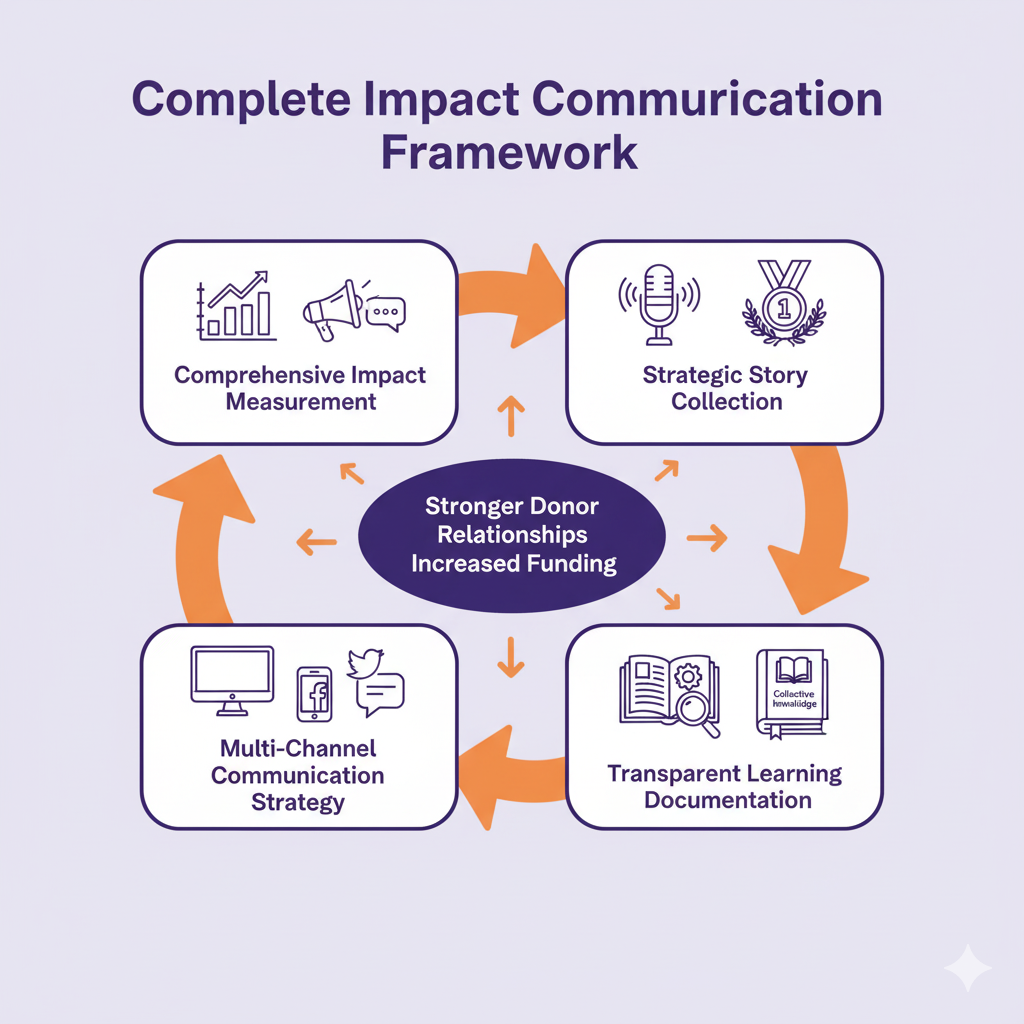
The Complete Impact Communication Framework

Effective impact communication requires systematic approaches that capture and share the full story of how donor investments create change:

Comprehensive Impact Measurement

Comprehensive Impact Measurement goes far beyond simple output counting to capture both quantitative outcomes and qualitative transformations. This includes measuring individual life changes, community improvements, systemic shifts, and long-term sustainability indicators that show the lasting value of programs.

Strategic Story Collection

Strategic Story Collection establishes ongoing processes for gathering and documenting success stories, beneficiary testimonials, and achievement examples that illustrate abstract impact through concrete individual experiences. These stories provide emotional connection that statistics alone cannot create.

Multi-Channel Communication Strategy

Multi-Channel Communication Strategy uses various platforms and formats to share different aspects of organizational impact and value. This might include detailed annual reports, monthly impact newsletters, social media success stories, and donor-specific communications that match different supporter interests and engagement preferences.

Transparent Learning Documentation

Transparent Learning Documentation creates regular reporting that honestly addresses both successes and challenges while demonstrating organizational learning and adaptation. This transparency actually increases rather than decreases donor confidence because it shows professional self-awareness and commitment to continuous improvement.

The Major Donor Advantage

The business case for comprehensive impact communication extends far beyond better marketing materials. Nonprofit Source reports that Nonprofits that share detailed impact stories see 45% higher donor retention rate vs. 27% for those that do not because supporters develop deeper emotional connections to mission outcomes.

Perhaps more importantly for growth, detailed outcome communication increases major gift prospects by 45%.

"Organizations that communicate detailed impact stories raise more money and build stronger donor relationships than those that rely solely on efficiency metrics," confirms the Association of Fundraising Professionals.

Major donors especially appreciate comprehensive impact reporting because they're making significant investments and want to understand exactly how their contributions create measurable change. When organizations can demonstrate both financial stewardship and mission effectiveness, they attract supporters who become long-term partners rather than one-time contributors.

Your Impact Communication Strategy

"Effective impact communication shows donors the complete story of how their investment creates change, from initial funding through final outcome," explains the Center for Effective Philanthropy.

This comprehensive approach requires systematic planning but delivers sustainable results that compound over time.

Implement Your 90-Day Impact Communication Upgrade:

  1. Audit Current Communication: Assess whether your organization relies too heavily on efficiency metrics versus impact demonstration
  2. Develop Measurement Systems: Create frameworks that capture both quantitative outcomes and qualitative transformation stories
  3. Build Story Collection Processes: Establish ongoing systems for gathering beneficiary testimonials and achievement documentation
  4. Design Multi-Platform Strategy: Create various communication approaches that share different aspects of organizational value with different supporter segments

Ready to transform your nonprofit's communication from efficiency-focused to impact-driven? Radiance Management provides comprehensive strategic consulting services and tactical marketing support specifically designed to help nonprofits develop compelling impact communication strategies. Our Connected Community Building framework and strategic consulting services create systematic approaches to donor engagement that build lasting supporter relationships while demonstrating authentic organizational value.

Ready to Transform Your Impact Communication?

Our strategic consulting services help nonprofits develop comprehensive impact communication strategies that attract major donors and build lasting relationships.

Schedule a Strategic Assessment