The most successful nonprofit campaigns aren't those controlled by headquarters. They're the ones that give supporters permission to make the cause their own. When you create programs that communities can adapt, customize, and share organically through their networks, something magical happens: a single initiative transforms into a global movement driven by authentic passion rather than organizational mandate.
The secret lies in designing for flexibility rather than control, enabling local ownership rather than demanding rigid compliance.
From Single Event to Global Phenomenon
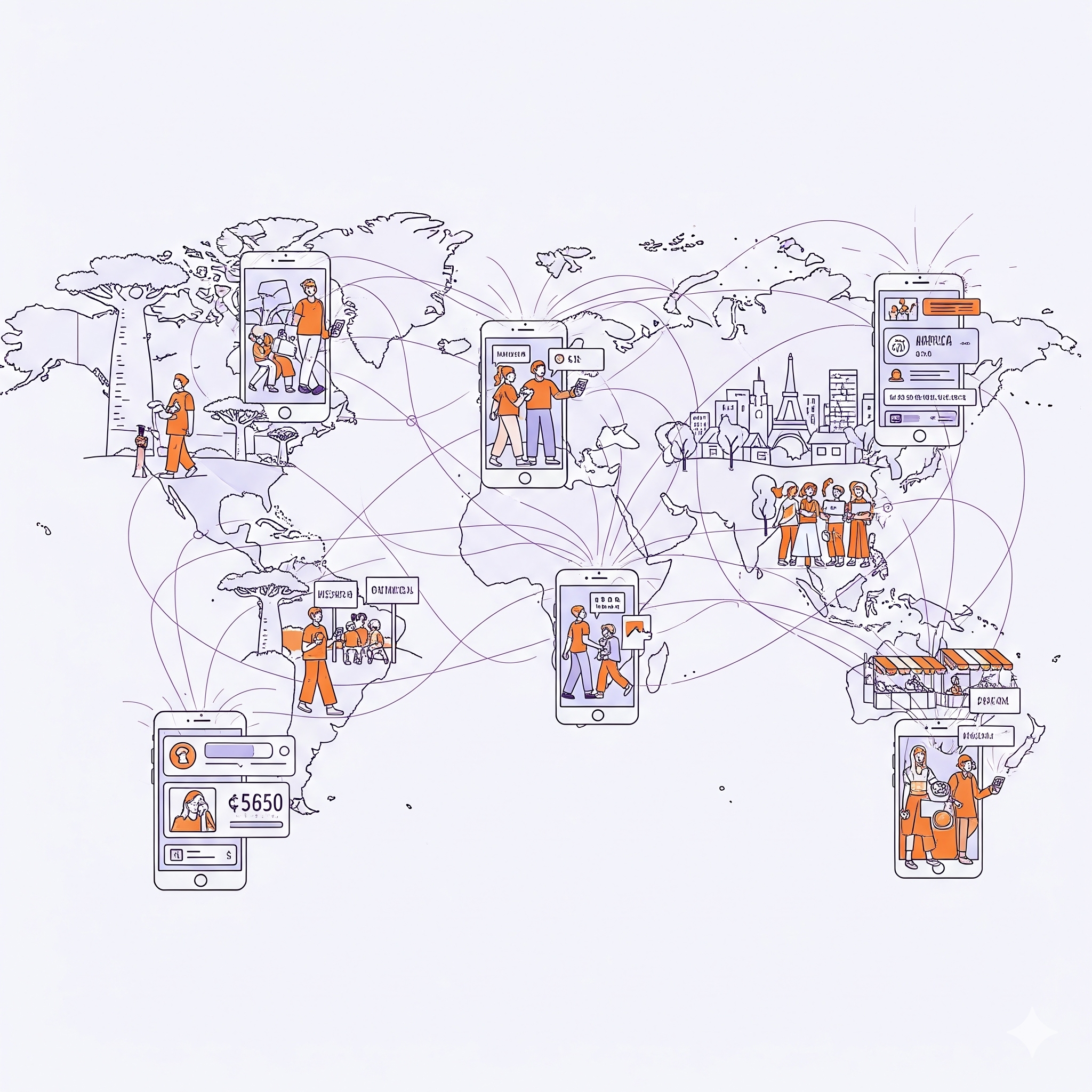
I worked with a nonprofit that launched what seemed like a simple annual 5K program. Within three years, this modest fundraising walk had spread across six continents, engaging thousands of participants in locations we never could have imagined reaching through traditional marketing.
The transformation happened because we made a counterintuitive decision: instead of creating strict guidelines and uniform requirements, we provided maximum flexibility. Community members could start their own version of the program at the grassroots level, using their local networks, resources, and creativity to contribute in ways that made sense for their unique circumstances.
The results exceeded our wildest expectations. Participants chose fascinating and meaningful locations for their walks: along ancient pilgrimage routes in Spain, through wildlife preserves in Kenya, around urban neighborhoods in Detroit, and even virtual walks for supporters with mobility challenges. Each adaptation generated authentic enthusiasm that no corporate marketing campaign could manufacture.
People tracked their activities on smartphones, shared photos from unique locations, and invited friends and family to join their personalized campaigns. The organic social media exposure and peer-to-peer sharing drove contributions far beyond what centralized efforts had ever achieved. Even one person in a location added to the global experience and inspired more to get added to the map. When there were multiple people in an area, it inspired them to connect with each other and form new bonds of friendship based on mutual interests. These became relationships that supported our organization over the long term.
Why Control Kills Community Energy
Traditional nonprofit campaigns often operate from a scarcity mindset: tight control over messaging, rigid event formats, and fear that local variations will dilute the brand. This approach treats supporters like passive consumers rather than active partners.
"The most powerful fundraising campaigns are those that empower supporters to become campaign leaders in their own communities," explains Katya Andresen, former CEO of Network for Good. Research validates this insight: peer-to-peer fundraising campaigns raise an average of $679 per participant compared to $226 for traditional events.
The control paradigm also ignores a fundamental truth about human motivation. "When you give people ownership over how they participate, they don't just give money—they become evangelists for your cause," notes Beth Kanter, nonprofit technology expert and author of "The Networked Nonprofit."
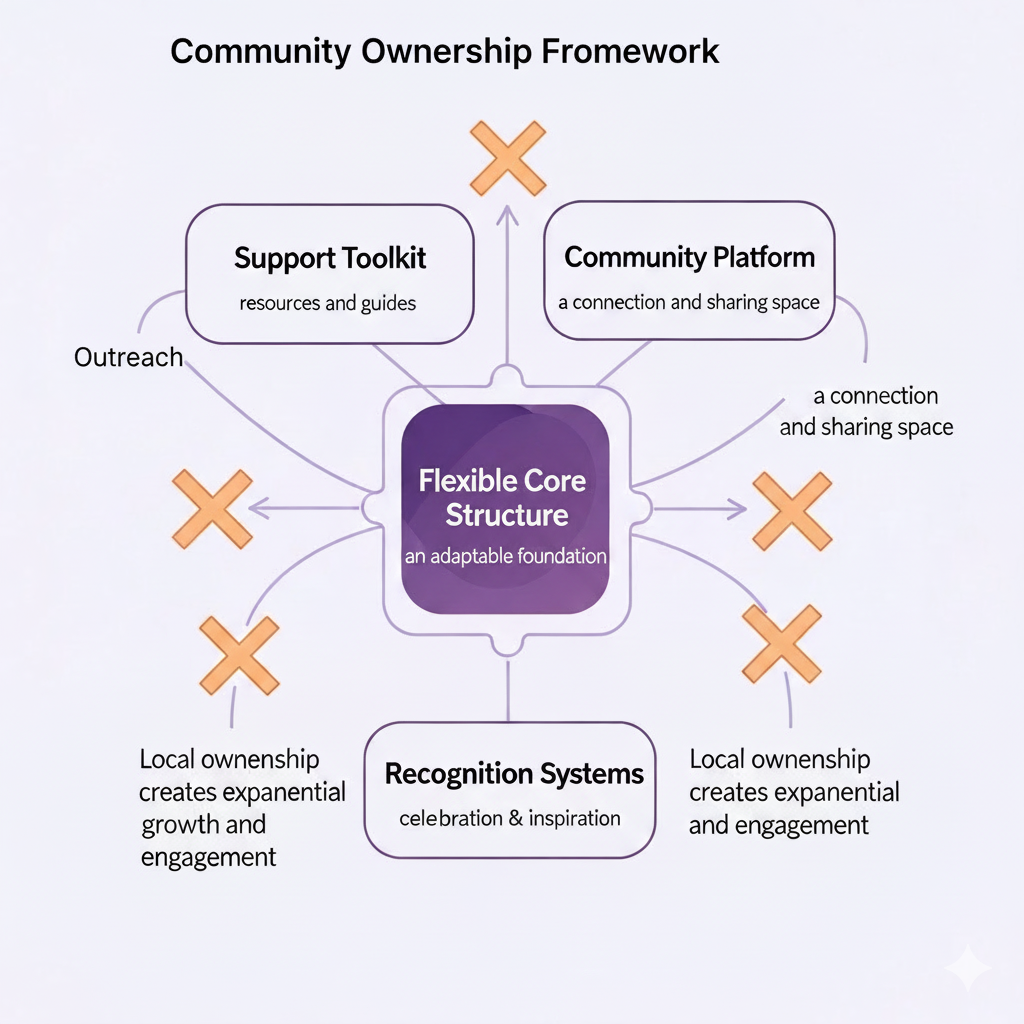
The Community Ownership Framework
Creating programs that multiply organically requires intentional design for flexibility while maintaining mission alignment. The most successful grassroots initiatives share four key characteristics:
Flexible Core Structure provides essential elements that can be adapted rather than rigid requirements that must be followed. Instead of mandating a specific 5K route, we created a framework where any walking or movement activity could qualify, whether individual or group, virtual or physical.
Comprehensive Support Toolkit gives local organizers everything they need to succeed without micromanagement. This includes customizable marketing materials, simple tracking tools, step-by-step guides, and suggested social media content that communities can adapt to their voice and culture.
Community Learning Platform enables organizers to share innovations, troubleshoot challenges, and celebrate successes together. The most creative local adaptations become inspiration for other communities, creating a positive cycle of innovation and improvement.
Recognition and Celebration Systems highlight local successes and innovative approaches, encouraging continued participation while inspiring others to create their own versions.
The Multiplication Metrics That Matter
The business case for community-led campaigns extends far beyond simple fundraising numbers. Organizations that involve communities in leadership roles maintain 85% higher retention rates year-over-year, according to Chronicle of Philanthropy research.
Grassroots campaigns generate 5 times more social media engagement than organization-led campaigns because authentic peer recommendations carry infinitely more weight than corporate messaging. "Grassroots campaigns succeed because they tap into the most powerful marketing force: authentic peer-to-peer recommendation," confirms Kivi Leroux Miller, founder of Nonprofit Marketing Guide.
Perhaps most importantly, community-led initiatives have 300% higher engagement rates because participants feel ownership rather than obligation. When people design their own participation, they become invested in success rather than simply compliant with instructions.
Implementation: Your Four-Phase Launch Strategy
Phase 1: Framework Development (Weeks 1-4)
Design core program elements that provide structure without limiting creativity. Define the essential mission connection while leaving maximum room for local adaptation and innovation.
Phase 2: Toolkit Creation (Weeks 5-8)
Build comprehensive resources that enable local success: customizable marketing materials, simple tracking systems, step-by-step implementation guides, and suggested social media strategies that communities can personalize.
Phase 3: Community Platform Launch (Weeks 9-12)
Create online spaces where local organizers can connect, share ideas, troubleshoot challenges, and celebrate successes. These platforms become the nervous system that enables learning and innovation to spread throughout the network.
Phase 4: Recognition and Growth (Ongoing)
Systematically highlight creative local adaptations and successful innovations. Use these stories to inspire new communities while celebrating existing participants, creating momentum for continued expansion.
Your Movement Multiplication Opportunity
The organizations that thrive in today's connected world are those that understand community energy multiplies when you give it freedom rather than constraint. When supporters feel ownership over their participation, they transform from passive donors into active evangelists who attract others through authentic enthusiasm.
Ready to transform your programs from controlled events into community-driven movements? Radiance Management's comprehensive strategic consulting services help nonprofits implement community building approaches that amplify impact through local ownership. Our Connected Community Building framework and Adaptable Product methodology create sustainable systems for grassroots engagement that scales organically while maintaining mission alignment.
Contact Radiance Management today to discover how community ownership can transform your initiatives into movements that grow beyond your wildest expectations.