When official channels fail and bureaucracy moves at glacial speed, your community network becomes your lifeline. The nonprofits that thrive in challenging environments aren't necessarily those with the largest budgets or most prestigious partnerships. They're the organizations that have invested in authentic relationships across diverse stakeholder groups and know how to activate those connections when crisis strikes.
The difference between mission failure and breakthrough success often comes down to one critical factor: the depth and accessibility of your relationship network when you need it most.
The $50,000 Shipment That Almost Never Arrived
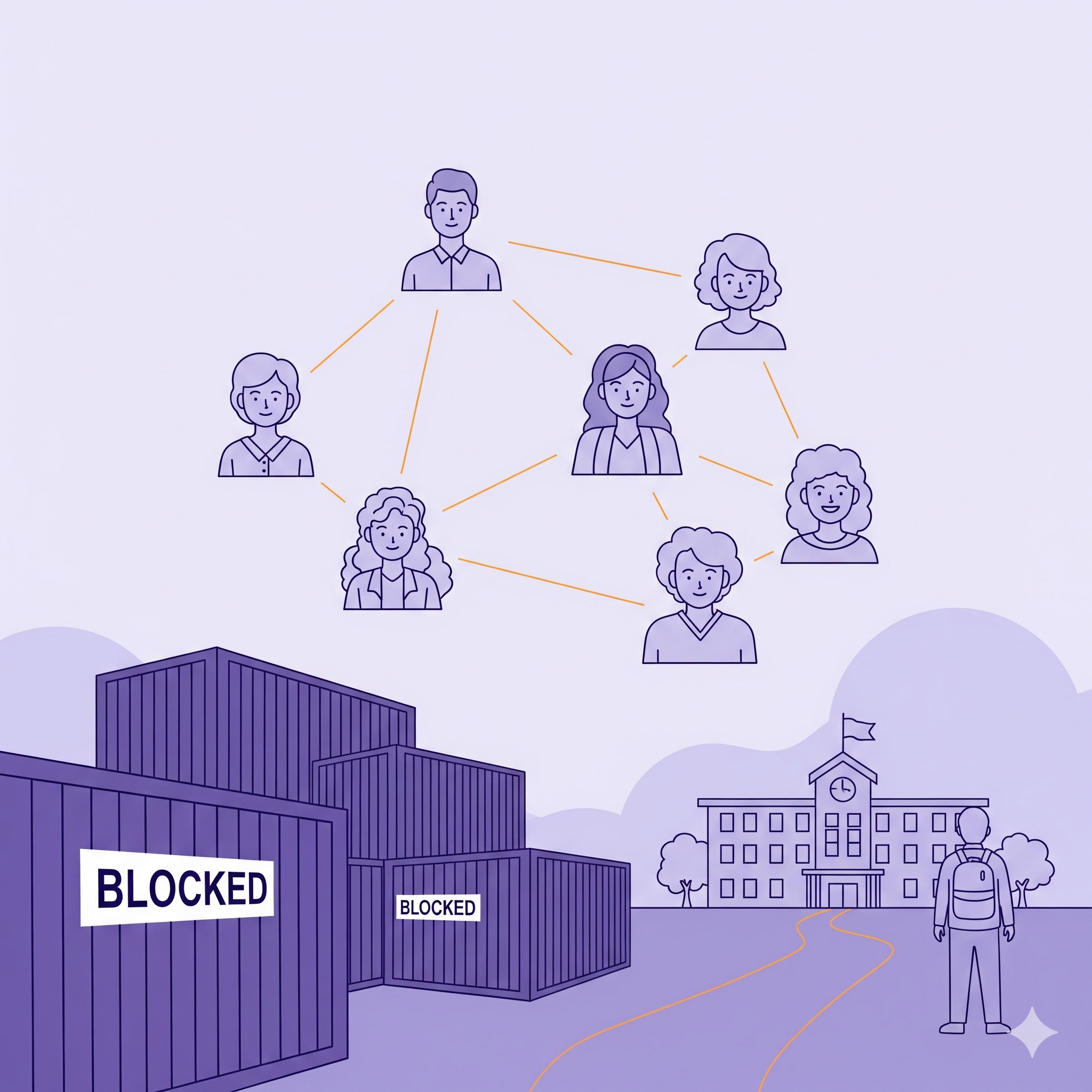
I worked at a nonprofit focused on delivering advanced computers to remote schools in underserved regions. During one critical delivery, we encountered what seemed like an insurmountable obstacle: an import agency in the destination country had blocked our shipment, citing unclear bureaucratic requirements that could take months to resolve through official channels.
The timing couldn't have been worse. These computers needed to reach the school before the academic term started, or an entire year of educational programming would be derailed. Traditional diplomatic channels were moving painfully slowly, and formal legal procedures would take far longer than our timeline allowed.
The breakthrough came when we shifted from institutional problem-solving to relationship-based solutions. Instead of escalating through official channels, we activated our extensive network of local contacts and donor community members who had regional connections. Within 48 hours, a donor who had business relationships in the country connected us with someone who understood the specific import requirements. A local partner provided cultural context we had missed. A community member made an introduction that opened the right conversation.
The computers reached the school three days before classes began. The solution came not through bureaucratic persistence but through authentic relationships and community problem-solving.
Why Traditional Crisis Management Falls Short
Most nonprofit crisis management focuses on institutional responses: insurance policies, legal procedures, and formal escalation channels. While these systems provide important safety nets, they often fail when facing complex, time-sensitive challenges that require local knowledge, cultural understanding, or rapid relationship-based solutions.
"The strength of a nonprofit isn't measured by its resources; it's measured by the depth and diversity of its community relationships," explains Diana Aviv, former CEO of Independent Sector. This insight becomes critical during crisis situations where formal procedures prove inadequate.
Research supports the power of community-based crisis response. Nonprofits with strong community networks are 70% more likely to overcome operational crises successfully, according to Stanford Social Innovation Review. The reason is simple: communities provide resources, knowledge, and connections that no single organization can possess internally.
The Community Crisis Response Framework
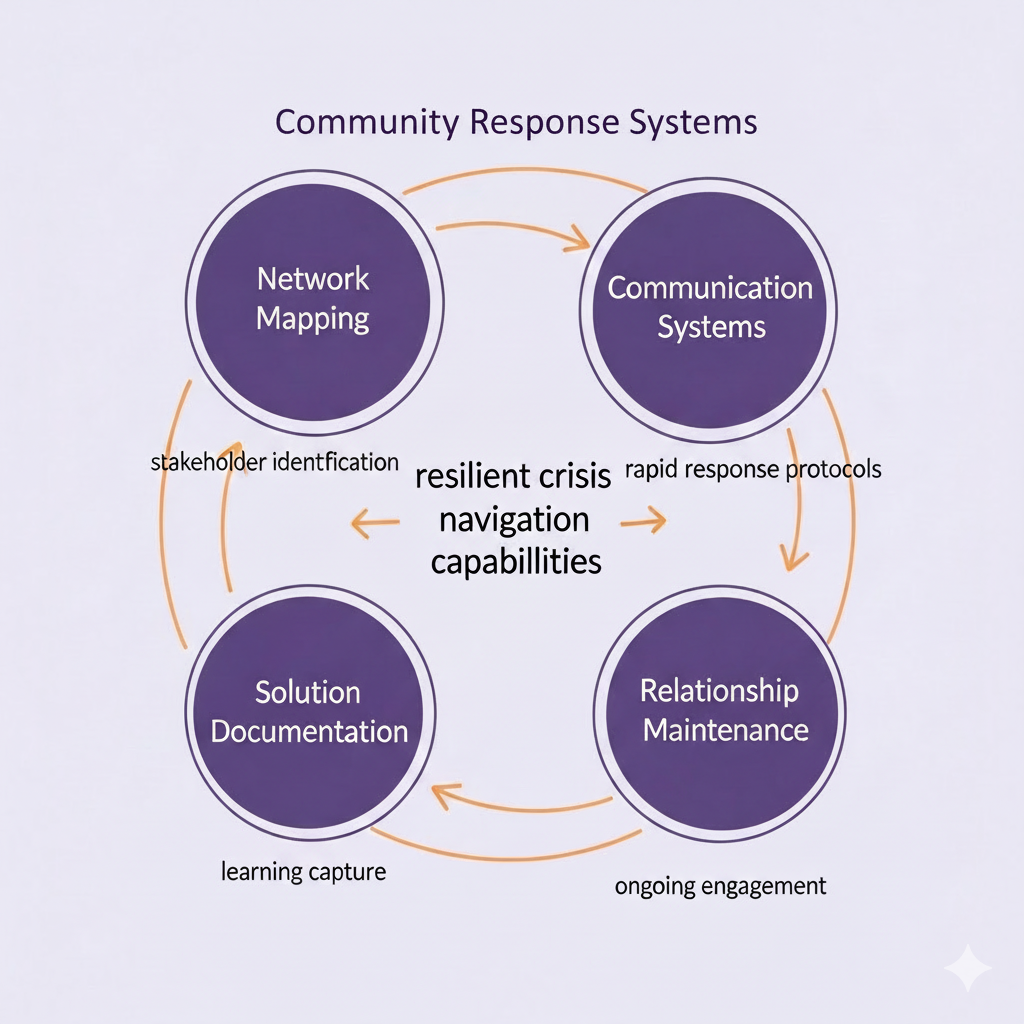
Building crisis-resilient operations requires intentional relationship development long before challenges arise. The most effective approach involves four interconnected elements:
Comprehensive Network Mapping goes far beyond traditional stakeholder lists to identify every person and organization with potential vested interest in your success. This includes obvious partners like donors and board members, but also local community leaders, beneficiaries, vendors, alumni, and even friendly competitors who share similar values.
Rapid Communication Systems enable you to quickly reach relevant network segments when specific challenges arise. Instead of mass communications that create noise, develop targeted messaging capabilities that can reach the right people with specific requests for assistance or expertise.
Relationship Maintenance Infrastructure ensures connections remain active and engaged before you need help. "The most resilient nonprofits are those that have invested in relationship building before they need to activate those relationships," notes Center for Effective Philanthropy findings.
Solution Documentation and Learning captures successful problem-solving approaches to guide future crisis response and demonstrate the value of community engagement to skeptical stakeholders.
The Speed and Sustainability Advantage
Community-activated solutions provide two critical advantages over institutional approaches: speed and sustainability. Organizations that regularly engage local stakeholders resolve logistical challenges 50% faster than those relying solely on formal channels, according to Bridgespan Group research.
The sustainability advantage is equally important. Community-activated solutions have 90% higher sustainability rates than externally imposed interventions because they leverage existing relationships and local knowledge rather than creating artificial dependencies.
"Crisis reveals the true value of community. Organizations with strong stakeholder networks have 60% faster recovery times," confirms Nonprofit Finance Fund research team. This speed difference often determines whether organizations can maintain mission continuity during challenging periods.
Building Your Crisis-Ready Network
Start with Extended Stakeholder Mapping
Identify everyone who has a stake in your success, including indirect beneficiaries, community leaders, professional networks, and even competitors who share your values. The goal is comprehensive relationship awareness, not just formal partnerships.
Develop Rapid Response Communication Protocols
Create systems for quickly reaching relevant network segments with specific requests. This includes communication templates, contact databases organized by expertise areas, and protocols for escalating urgent requests through relationship networks.
Implement Regular Relationship Maintenance
Establish touchpoints that keep connections active without being burdensome. Share updates, celebrate successes, ask for advice on non-urgent matters, and find ways to support network members' own goals.
Document and Share Success Stories
"Local contacts and community relationships are often the difference between mission failure and breakthrough success in challenging environments," notes InterAction research on international development. Create case studies that demonstrate this value to inspire continued network engagement.
Your Network as Strategic Asset
The organizations that navigate crises most effectively are those that treat relationship building as core infrastructure rather than nice-to-have networking. When formal systems fail, authentic community connections provide the flexibility, speed, and local knowledge that can mean the difference between mission success and devastating setbacks.
Ready to transform your crisis preparedness from institutional procedures to community-powered resilience? Radiance Management's comprehensive strategic consulting services help nonprofits build the relationship networks and adaptive systems that enable breakthrough success in challenging environments. Our Connected Community Building framework and Crisis Response & Resilience Building services create sustainable systems for activating stakeholder networks when you need them most.
Contact Radiance Management today to discover how strategic relationship building can become your organization's most powerful crisis navigation tool.