Strategic Planning

Breaking the Grant Dependency Trap: How Community Engagement Creates Sustainable Funding Independence

Breaking Grant Dependency

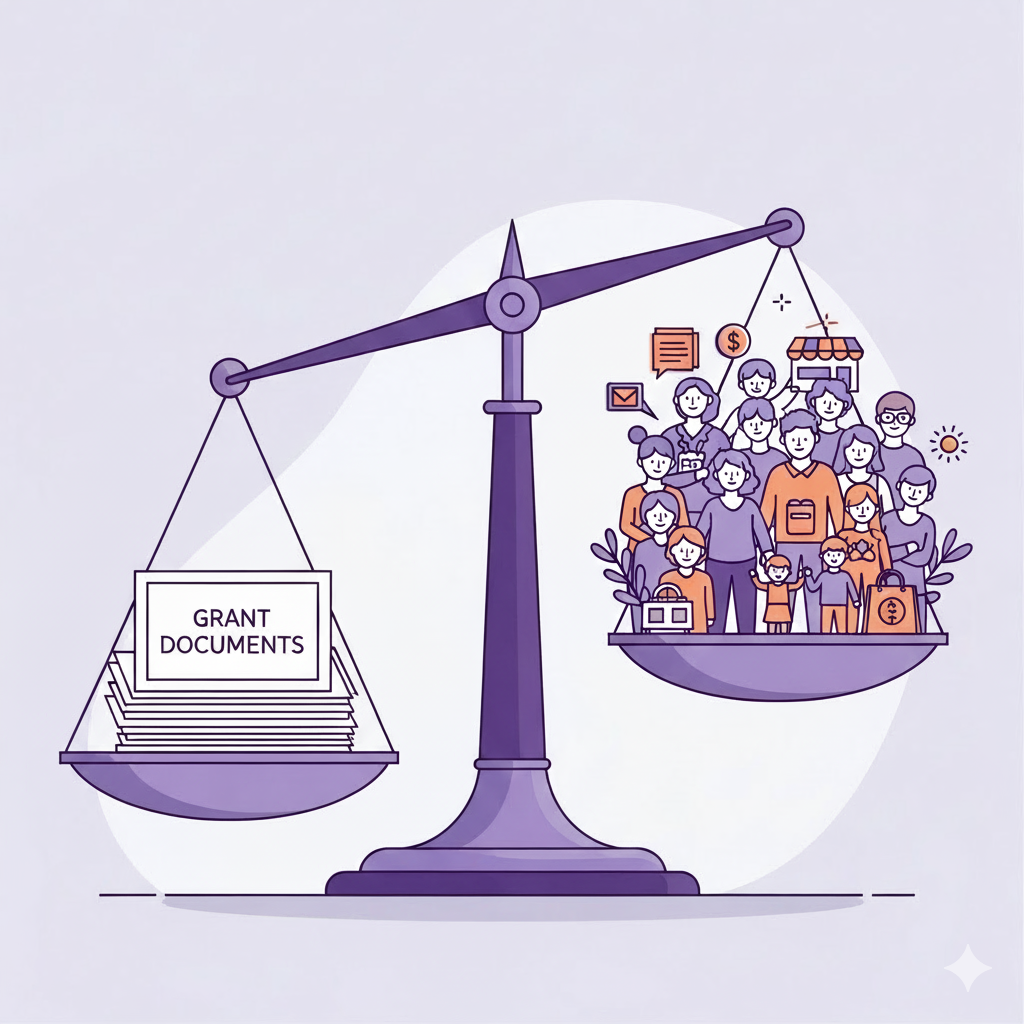
Grant dependency is the silent killer of nonprofit independence. While institutional funding provides crucial startup capital and program support, organizations that rely too heavily on grants sacrifice flexibility, compromise mission integrity, and create dangerous vulnerabilities that can devastate their impact when funding priorities shift.

The path to sustainable growth lies not in abandoning grants, but in building balanced funding portfolios anchored by engaged community supporters who understand and champion your work. This transformation requires systematic approach to donor development, but the results create organizational resilience that weathers any funding storm.

The $500,000 Wake-Up Call That Changed Everything

I worked at a nonprofit that had been primarily started and sustained through grant writing and institutional funding for nearly a decade. The organization was effective at securing major grants, but this success masked a dangerous dependency that limited our growth and adaptability.

When I joined the team, I began organizing and systematizing the donor communications and individual giving processes that had been largely neglected. My focus was making it much easier for people to understand our mission, see exactly where their dollars were going, understand the specific impact they were creating, and increase their involvement and sharing within our broader community.

The transformation didn't happen overnight, but through sustained effort and strategic focus, our funding composition gradually shifted from 90% grants to approximately 50/50 grants to individual donors. While the transformation wasn't complete when I left, the direction was clear and gave the organization much more flexibility, stability, and adaptability to changing funding environments and opportunities.

More importantly, the individual donors weren't just writing checks. They became advocates who opened doors, made introductions, and provided insights that no grant application could capture. The community support created a foundation that institutional funding alone never could.

Why Grant Dependency Creates Organizational Fragility

Grant funding operates on institutional timelines and priorities that may not align with community needs or organizational mission. When foundations shift focus, experience leadership changes, or face their own financial pressures, grant-dependent organizations find themselves scrambling to maintain basic operations.

"Diversified funding isn't just about financial stability. It's about organizational independence and mission integrity," explains the Nonprofit Finance Fund research team. Organizations beholden to a few major funders often compromise their programming to match funder priorities rather than community needs.
The statistics support this concern. Nonprofits with diversified funding sources are 60% more likely to survive economic downturns because they're not vulnerable to single points of funding failure. When your survival depends on three or four major grants, your organization's future lies in the hands of people who may never interact with the communities you serve.

Community funding strategies

The Community Support Advantage

"The strongest nonprofits are those supported by communities that understand and champion their work, not just foundations that fund their proposals," notes the Chronicle of Philanthropy editorial team. Community-supported organizations enjoy advantages that extend far beyond financial diversification.

Individual donors provide more than money. They become stakeholders who offer expertise, connections, and advocacy that institutional funders rarely provide. A engaged donor might introduce you to their employer's corporate giving program, volunteer their professional skills for a specific project, or advocate for your organization within their social networks.

Community-supported nonprofits have 40% more operational flexibility than grant-dependent organizations because individual donors typically care more about mission outcomes than specific program structures. This flexibility enables organizations to adapt quickly to changing community needs without waiting for grant approval processes.

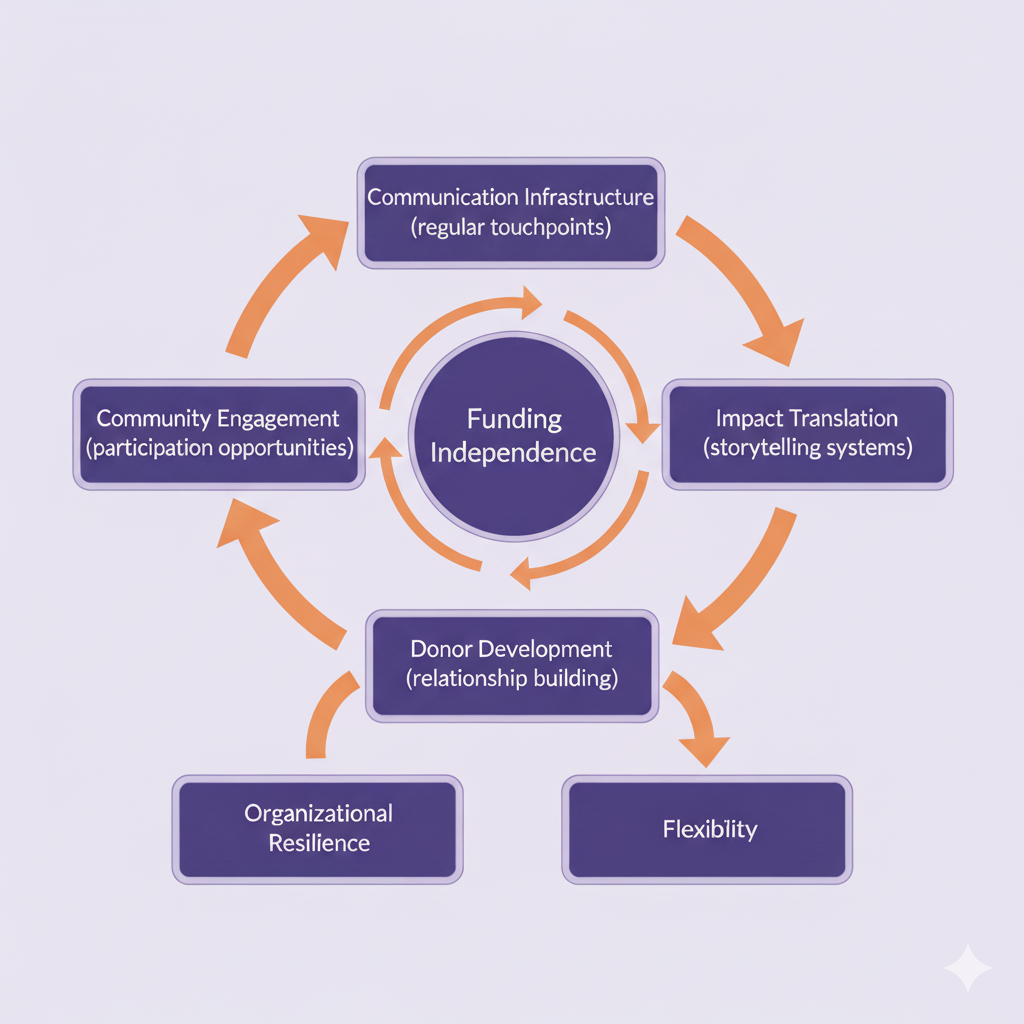
The Strategic Transformation Framework

Phase 1: Systematic Communication Infrastructure

Create regular touchpoints that help supporters understand mission impact and organizational needs beyond annual appeals. This includes monthly impact newsletters, quarterly donor calls, and systematic storytelling that connects individual contributions to specific outcomes.

Phase 2: Impact Translation and Storytelling

Translate program outcomes into compelling stories that demonstrate effective donor investment. Move beyond generic success metrics to showcase individual transformations, community changes, and long-term impact that donors can understand and share with others.

Phase 3: Community Engagement Beyond Giving

Create opportunities for supporters to participate in your mission beyond financial contributions. This might include volunteer opportunities, advocacy actions, skill-based consulting, or community events that build deeper organizational connection and understanding.

Phase 4: Donor Development and Growth Systems

Design systematic approaches to move supporters up the engagement ladder from awareness to advocacy. Organizations that invest systematically in donor development see 25% annual growth in individual giving because they're building relationships rather than just processing transactions.

Your Funding Independence Strategy

The most resilient nonprofits are those that combine institutional support with community engagement, creating funding portfolios that provide both stability and flexibility. "Individual donor development takes more work than grant writing, but it creates relationships that sustain organizations through any funding environment," confirms the Association of Fundraising Professionals.

Ready to transform your funding strategy from dependency to independence? Radiance Management provides comprehensive strategic consulting services and marketing agency support specifically designed to help nonprofits develop sustainable community engagement and diversified funding strategies. Our Connected Community Building framework and tactical marketing services create systematic approaches to donor development that build lasting supporter relationships while maintaining organizational independence.

Contact Radiance Management today to discover how strategic community engagement can become your pathway to funding independence and organizational resilience.

Sarah Rohm

About the Author

Sarah Rohm transforms decades of marketing, nonprofit leadership, executive management, and teaching experience into practical learning experiences for today's nonprofit and socially inspired enterprise leaders. Having navigated multiple industry transitions, nonprofit cycles, and scaling challenges, Sarah specializes in helping organizations and individuals adapt to changing realities while building more effective teams.

Ready to Transform Your Nonprofit's Strategy?

Radiance Management provides comprehensive strategic consulting services that help nonprofits implement data-driven approaches and build sustainable community engagement.

Get Strategic Guidance

Stay Updated with Strategic Insights

Join nonprofit leaders who receive our latest frameworks and transformation strategies

Get Strategic Updates