Adaptive Frameworks

From Boardroom Decoration to Strategic Powerhouse: How to Transform Advisory Board Potential into Mission Impact

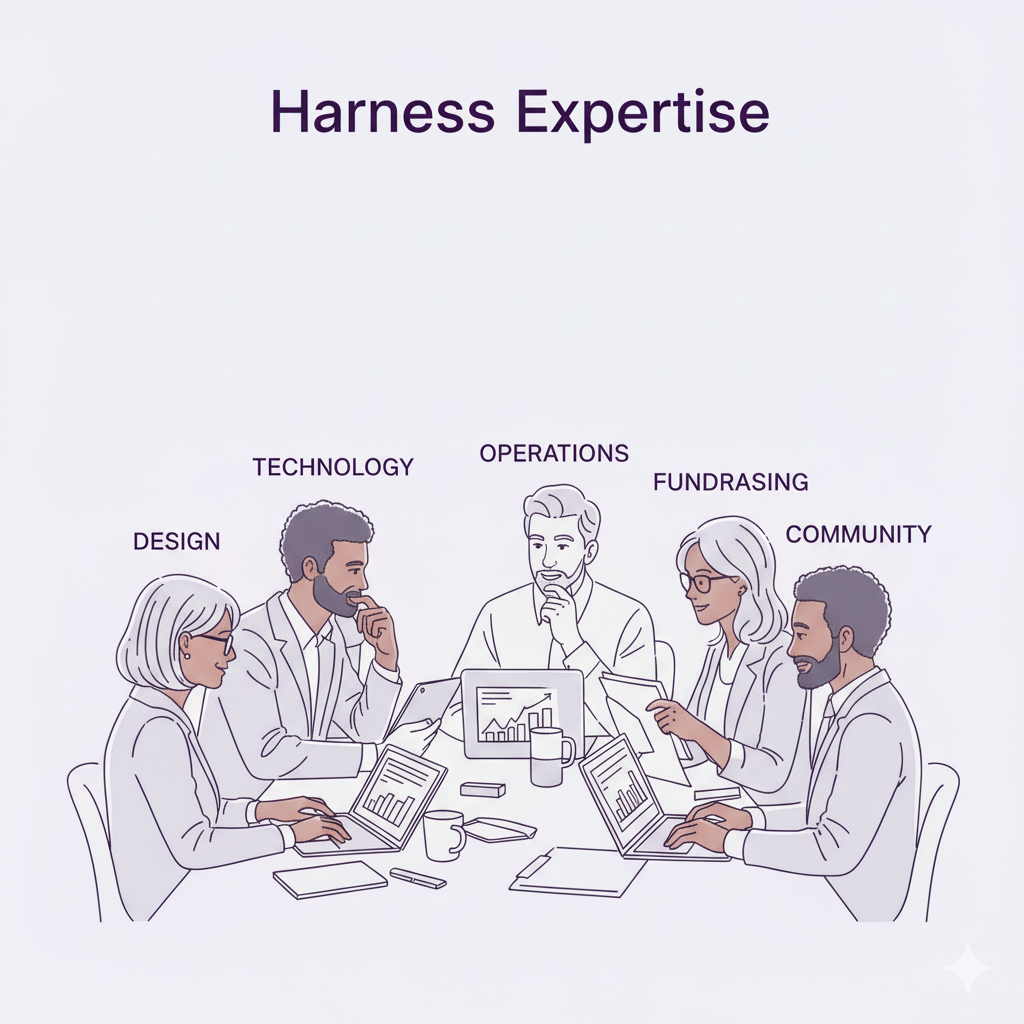
Board engagement transformation concept

Your advisory board members are successful executives, seasoned professionals, and influential community leaders. They joined your board because they believe in your mission. Yet most of them sit through performative quarterly meetings feeling underutilized while your organization struggles with challenges that match their exact expertise. This disconnect represents one of the nonprofit sector's greatest missed opportunities.

The solution isn't more meetings or longer board terms. It's reimagining how we engage board talent through strategic, skills-based contributions that create measurable impact while respecting busy schedules.

The Million-Dollar Board That Wasn't

I worked at a nonprofit that had assembled an incredible advisory board: a marketing executive from a Fortune 500 company, a successful entrepreneur who had built and sold three businesses, a former government official with extensive policy experience, and a technology leader from a major consulting firm, among others. On paper, this group represented millions of dollars in consulting value and decades of strategic expertise.

In reality, their primary contribution was attending four meetings per year, re-sharing our stories on social media, and writing annual checks. We were essentially paying premium prices for boardroom influencers while struggling with the exact challenges these individuals had mastered in their careers.

The breakthrough came when we started thinking like a modern workforce platform. Instead of asking board members to commit to undefined responsibilities, we began presenting specific, time-bounded projects that matched their expertise. We set up joint partnerships with team members for mentorship opportunities. And we put them to work! The marketing executive helped redesign our donor communications strategy in two focused sessions. The entrepreneur provided strategic guidance on our social enterprise initiative during a single afternoon workshop. Suddenly, board engagement transformed from obligation to opportunity. Far from making our board members feel taken advantage of, they felt more valued, engaged, and empowered to help us realize our vision in the trenches with us.

Why Traditional Board Engagement Fails

Most nonprofit boards operate on an industrial-age model: regular meetings, committee assignments, and one-size-fits-all expectations. This approach wastes talent and frustrates high-achieving professionals who are accustomed to making targeted, high-impact contributions.

"Advisory board members want to make a difference, but too often we give them meetings when what they really want is meaningful work," explains Simone Joyaux, nonprofit consultant and author of "Strategic Fund Development." Research supports this insight: 73% of nonprofit board members report feeling underutilized in their roles, according to BoardSource's Leading with Intent Study.

The traditional model also fails to recognize that board members' most valuable contributions often happen outside formal meetings. A five-minute phone call to the right contact can solve problems that committees might debate for months. A brief email introduction can open doors that formal proposals cannot. Additionally, they often have access to connections with expertise, talent. All they need is a clearly scoped project to invite people to join.
The Micro-Engagement Revolution

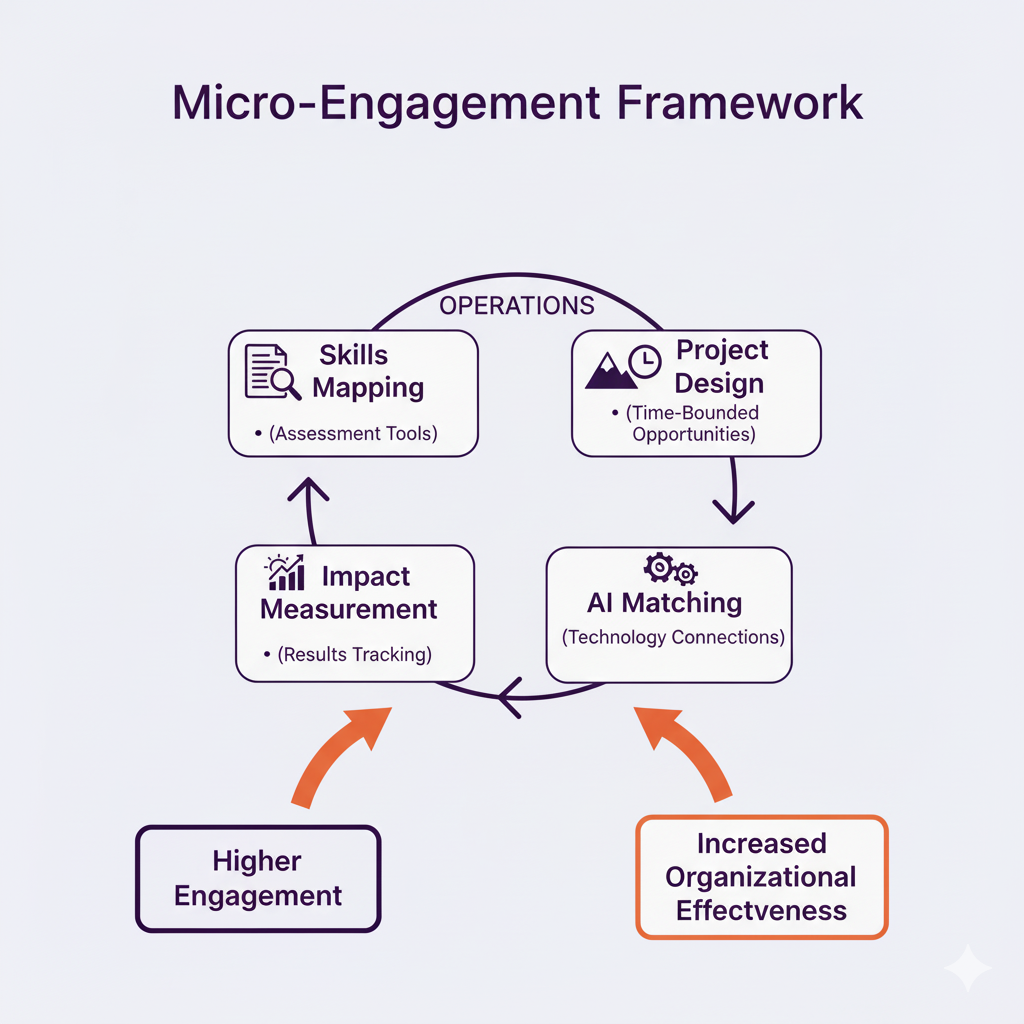
The future of board effectiveness lies in what I call "micro-engagement": targeted, project-based contributions that leverage specific expertise without demanding ongoing time commitments. This approach transforms board service from a general obligation into strategic deployment of specialized skills.

Strategic Project Matching starts with detailed skills audits that go beyond professional titles to identify specific capabilities, network connections, and personal interests. A board member who happens to be passionate about social media might contribute more value through digital strategy guidance than through traditional governance oversight.

Time-Bounded Contributions respect that successful professionals have carefully managed schedules. Instead of asking for monthly committee participation, offer focused projects: "We need two hours of your expertise to review our new program model" or "Could you provide feedback on our strategic plan during a single 90-minute session?"

AI-Enhanced Opportunity Matching uses technology to identify perfect intersections between organizational needs and board member capabilities. When a specific challenge arises, smart systems can instantly identify which board member has relevant experience and availability.

Four-step board engagement framework

The Four-Step Implementation Framework

Step 1: Comprehensive Skills and Interest Mapping
Create detailed inventories that capture not just professional expertise but personal passions, network connections, and preferred contribution styles. Some board members excel at strategic thinking, others at tactical problem-solving, and still others at relationship building.

Step 2: Project-Based Opportunity Design
Transform ongoing organizational challenges into specific, actionable projects with clear deliverables and timelines. Instead of "help with fundraising," create focused opportunities like "review our major donor cultivation strategy" or "introduce us to three potential corporate partners."

Step 3: Technology-Enabled Matching Systems
"The future of board engagement lies in micro-volunteering opportunities that match board members' skills with organizational needs in real-time," notes TechSoup nonprofit research. Modern platforms can automatically identify optimal matches between emerging needs and available expertise.

Step 4: Impact Documentation and Recognition
Show board members exactly how their contributions advance mission outcomes. Quantify results: "Your strategic guidance helped us increase program efficiency by 30%" or "Your introduction led to a $50,000 partnership." This feedback loop encourages continued engagement and demonstrates organizational professionalism.

The Engagement-Revenue Connection

The business case for board engagement extends far beyond volunteer hours. Organizations with highly engaged boards raise 2.6 times more revenue than those with disengaged boards, according to BoardSource research. When board members feel valued and utilized, their financial commitment typically increases alongside their time investment.

"When board members feel their time and expertise are valued through substantive contributions, their financial commitment typically increases as well," confirms Association of Fundraising Professionals research. Engaged board members also become more effective ambassadors, opening doors and making introductions that passive members never would.

Additionally, 85% of board members say they would increase their involvement if given more meaningful, skills-based opportunities. This represents enormous untapped potential for organizations willing to reimagine board engagement.

Measuring Success: Beyond Meeting Attendance

Traditional board metrics focus on attendance and committee participation. Effective board engagement measurement tracks impact and satisfaction. Monitor project completion rates, skills utilization, network activation, and member satisfaction with their contributions.

Create regular feedback loops that capture both quantitative outcomes and qualitative experiences. Board members should feel energized by their involvement, not drained by meaningless obligations.

Technology as the Great Enabler

Modern technology makes sophisticated board engagement possible at scale. AI-powered platforms can analyze organizational challenges, identify relevant board expertise, and suggest optimal project matches. Communication tools enable targeted collaboration without requiring physical presence or ongoing time commitments.

"The most effective nonprofit boards are those where every member feels their unique expertise is being leveraged for maximum organizational impact," according to BoardSource research findings. Technology makes this individualized approach practical and sustainable.

Your Strategic Board Transformation

The difference between boards that add value and those that consume resources lies in how intentionally organizations deploy their expertise. When board members see their specific skills creating measurable impact, engagement becomes natural rather than forced.

Ready to transform your advisory board from ceremonial fixture to strategic asset? Radiance Management's comprehensive strategic consulting services help nonprofits unlock board potential through systematic engagement and community building approaches. Our Adaptable Product Framework and specialized transformation services create sustainable systems for maximizing board contribution while building stronger organizational capacity.

Contact Radiance Management today to discover how strategic board engagement can become your organization's competitive advantage in achieving mission impact and sustainable growth.

Sarah Rohm

About the Author

Sarah Rohm transforms decades of marketing, nonprofit leadership, executive management, and teaching experience into practical learning experiences for today's nonprofit and socially inspired enterprise leaders. Having navigated multiple industry transitions, nonprofit cycles, and scaling challenges, Sarah specializes in helping organizations and individuals adapt to changing realities while building more effective teams.

Ready to Transform Your Nonprofit's Strategy?

Radiance Management provides comprehensive strategic consulting services that help nonprofits implement data-driven approaches and build sustainable community engagement.

Get Strategic Guidance

Stay Updated with Strategic Insights

Join nonprofit leaders who receive our latest frameworks and transformation strategies

Get Strategic Updates